Recovery Tools Every Dancer Needs
December 3, 2025
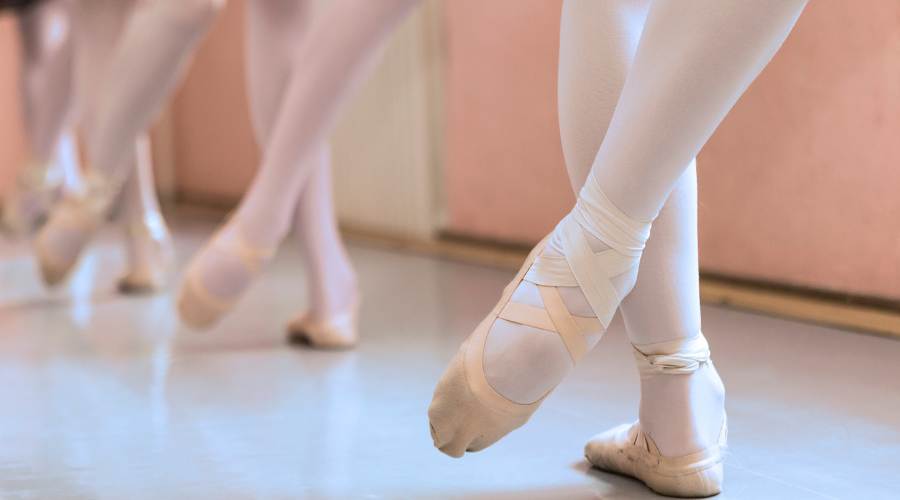
Dancers spend hours in the studio perfecting their craft, moving through rehearsals, choreography, and technique work. All that training can take a toll on the body—physically and mentally—making recovery and the right support tools essential for staying strong, healthy, and performing at their best.
To help dancers stay healthy and dance their best, our Dance Medicine Program is sharing some of our favorite recovery tools and how they can support your dancer during this high-demand time of year.
Toe Spacers
Pointe shoes, character shoes, Irish shoes, and tap shoes all help dancers create beautiful movement on stage—but they also place a lot of stress on the feet. These shoes tend to be narrow, stiff, and unsupportive, which increases compression on the forefoot and toes.
Taking a few minutes before or after class to give the feet some extra care goes a long way. Toe spacers are a simple and effective tool for this.
Benefits of Toe Spacers
- Realign the toes and reduce crowding caused by tight shoes
- Help the toes return to a natural resting position, lowering long-term bunion risk
- Improve circulation and reduce discomfort
- Support joint mobility in the forefoot
Massage Guns
During busy rehearsal seasons, it can be difficult to fit in traditional self-care like massages. Long hours of dancing can lead to tight, overworked muscles—and over time, this can increase injury risk.
A massage gun is a portable, convenient recovery tool dancers can use to manage muscle soreness and tension.
How They Work
Massage guns use percussion and vibration to release tightness and reduce muscle tension.
Benefits of a Massage Gun
- Increase blood flow to overworked tissues
- Reduce muscle soreness after long practices
- Decrease muscle tension and spasms
- Improve mobility by releasing trigger points and tight areas
Kinesiology Taping
Kinesiology taping—often referred to as KT Tape or RockTape—can be an effective recovery tool during heavy rehearsal periods and performance week. Unlike traditional athletic tape, KT is elastic, allowing dancers to move naturally while still getting gentle support.
How Kinesiology Tape Helps
- Reduces strain on irritated tissues and tendons
- Improves proprioception (body awareness), helping dancers control alignment and movement
- Assists with swelling or bruising after intense rehearsals or minor tweaks
Foam Rollers and Lacrosse Balls
Foam rolling or using a lacrosse ball is a quick and convenient way to relieve tension during long days in the studio or theater. These tools can be used as part of a warm-up, cooldown, or even between rehearsals.
Benefits of Foam Rolling
- Reduces muscle tension from repetitive use
- Improves mobility and flexibility
- Decreases post-rehearsal soreness
- Helps prevent overuse injuries
Common Areas for Lacrosse Ball Release
- Feet and arches
- Glutes
- Upper back
- Any area with a trigger point or deep tension
When Should a Dancer See a Physical Therapist?
Schedule an evaluation if your dancer:
- Has pain lasting longer than one week
- Feels pain that worsens during rehearsal
- Is modifying choreography to avoid discomfort
- Experiences swelling or instability
- Has recurring pain each performance season
Nutcracker season is an exciting but physically demanding time for dancers, making recovery and self-care essential for staying healthy. Incorporating simple tools like toe spacers, massage guns, kinesiology tape, and self-myofascial release can help dancers manage fatigue, reduce soreness, and perform their best. With the right recovery strategies, dancers can enjoy the magic of the season while keeping their bodies strong and resilient.
Our Dance Medicine team is here to help them stay strong, confident, and injury-free. Explore our Dance Medicine Program to learn how we keep dancers performing at their best!
Want more information on recovery for dancers? Check out our playlist on YouTube.
People Also Ask
Are toe spacers good for dancers? Yes. Toe spacers help counteract the compression from pointe and character shoes, improving alignment and circulation.
Do massage guns help prevent dance injuries? Massage guns can help reduce muscle tightness and improve circulation, which supports recovery — but they should be combined with strength training and proper load management.
Is kinesiology tape safe for dancers? When applied correctly, kinesiology tape can provide proprioceptive feedback and mild support without restricting movement.
How do dancers recover during Nutcracker season? Recovery should include sleep, hydration, proper fueling, mobility work, soft tissue release, and load management — not just rest.
About the Author: Megan Long