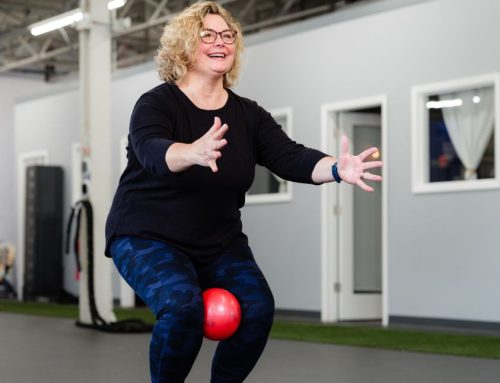
Benefits of Barefoot Workouts
November 10, 2025

Barefoot workouts are more than a trend—they’re a way to improve your movement, strength, and longevity. There are four major benefits of training without shoes:
- Strengthening Your Feet
- Improving Your Balance
- Enhancing Agility
- Boosting Awareness (Proprioception)
All four of these help not only with improving your capabilities during workouts, but also improve your longevity. That makes barefoot workouts best for anyone looking to improve their capacity for movement.
What is a Barefoot Workout?
A barefoot workout means exercising without shoes. This can include:
- Lifting heavy weights in powerlifting
- Bodyweight core exercises
- Yoga or Pilates with only socks
- Plyometrics, like box jumps, without shoes
Some gyms require shoes, especially when working with weights but some gyms only require wearing socks. Some athletes wear toe separators when lifting without shoes to allow optimal positioning of their toes. Wearing these separators takes some getting used to but you will now notice smaller foot muscles (called intrinsic muscles) that you do not normally feel during workouts.
Considerations and Challenges
Barefoot workouts aren’t for everyone immediately. If you have chronic foot issues, such as plantar fasciitis, patience is key. Initially, exercises may irritate tissues like the plantar fascia, but strengthening your feet over time can reduce these symptoms.
Tight ankles or hips may also require work to gain mobility. Cushioned shoes and orthotics often mask these issues, but learning how your body naturally moves leads to better long-term fitness. Strengthening intrinsic foot muscles improves foot stability, which translates to better control of the inner thighs (adductors) and outer hip muscles (gluteus medius). Think of your big toe as a kickstand: a stable base helps stabilize muscles higher up the kinetic chain.
Shoes (especially extra cushioned ones) hide many problems and orthotics/arch supports allow us to get away with sloppy movements. If you are willing to take some time to learn how your body moves, then barefoot workouts will have huge gains in your overall fitness. When intrinsic muscles can help stabilize your foot, especially through your inside or medial arch, you will notice you have better control to maximize on muscles in your inner thighs (or adductors) and outside hip muscles like your gluteus medius. One example is harnessing the power of your big toe: think about your big toe as a kickstand to your body, allowing stability and control to muscles higher up the kinetic chain because the base is stable.
Balance Benefits
How often do you think about balance? If you are under the age of 40, probably not very often. But as you age, you may notice that you are not as stable on one foot or when navigating on uneven ground. Strengthening intrinsic muscles are key for improving your balance, especially when walking on uneven ground or when you have to do single leg activities. Think about how much more powerful RDLs or Bulgarian split squats can be if the stance foot is stable and strong.
Strengthening intrinsic muscles improves balance for activities like:
- Walking on uneven ground
- Single-leg exercises, like RDLs or Bulgarian split squats
A strong, stable stance foot allows you to fully activate the muscles above it, improving performance and reducing injury risk.
Why Agility and Awareness Matter in Barefoot Workouts
Improving agility also becomes important later in life. We take for granted our ability to quickly change directions when we are younger, but as we age, that ability to quickly react is the difference between falling or catching ourselves. Playing tag with friends, a pick up basketball game or chasing kids around the yard are important agility activities. But once we are no longer doing those activities, our reflexive abilities decline. So if you trip over your dog in the middle of the night, you want to have trained to quickly step or move to prevent a fall – that takes training.
Barefoot workouts allow for this training because of input to those intrinsic muscles. We tend to feel more springy when doing barefoot training so it lends itself to feeling fun while doing agility ladders or jumping rope. Plyometric activities like burpee, box jumps, jumping lunges or lateral hops (especially on one foot) will help foster this reactive training.
Proprioception: The Hidden Benefit
Barefoot training allows us to have a meaningful connection between what our feet are doing and how the rest of our body moves in reaction to that. Shoes do not allow us to feel our feet. Improving proprioception or kinesthetic awareness is the best way to reduce the risk of injury because we learn how to move more efficiently.
Benefits of improving proprioception include:
- Reduced risk of injury through more efficient movement
- Enhanced performance in strength, balance, and agility exercises
- Improved joint stability
- Cognitive benefits: better memory, attention, and overall brain function
Running barefoot on grass or sand versus wearing shoes demonstrates how subtle changes in foot input can transform your movement and coordination. This mind-body connection is key for longevity and healthy aging.
Final Thoughts
Shoes do not allow us to feel our feet.
Improving proprioception or kinesthetic awareness is the best way to reduce the risk of injury because we learn how to move more efficiently. Start slow, focus on form, and feel the difference from the ground up. Your feet are stronger than you think!
About the Author: Denise Smith