Learn More About Your Core
June 30, 2026
When you think about what your core is, what is your first thought? Is it a picture of “6-pack abs”? Do you know what someone means when they say “squeeze your core”? The core is much more complex than just one muscle. And it serves a very important function for the health of your spine, as well as the rest of your body.
Taking a look at the anatomy of your “Core”
When you think about your “core”, it helps to imagine a cylinder in the midsection of your body. On the top, you have your diaphragm. This muscle is your breathing muscle, and it has a very important role in allowing your core muscles to work appropriately. On the bottom, you have your pelvic floor. Everyone has a pelvic floor, whether you are male or female. These muscles play an important role in supporting your organs and these muscles must work in unison with your diaphragm to keep your intra-abdominal pressure managed.
In the front, you have your transverse abdominus and rectus abdominus. Your transverse abdominus muscle wraps all the way around from your spine to your belly button, which acts like a corset and supports your spine. Your rectus abdominal muscle is your “6-pack” muscle group, which works to bend your trunk forward. On the sides, you have your obliques. These muscles help you bend to the sides, but they also work together to then prevent rotation or bending of your spine. And on the back, you have muscles that attach to your spine, such as your multifidus. These muscles attach to your spine to provide stability at each level.
What does your core actually do?
Your core has 3 main roles:
- Stabilization
- Imagine your core as the foundation of your house. You need a solid foundation to prevent things from collapsing. Your core needs to be solid and working in unison to prevent things from collapsing above or below your trunk
- Transfers forces to produce movement
- Your core connects your upper body and your lower body. Your core needs to be solid for you to connect these body parts, such as throwing a ball or swinging a golf club
- Controls your breathing and intra-abdominal pressure
- Maybe you have experienced it or know someone who has, where they are scared to cough or sneeze. Maybe this is because you or someone you know has “thrown their back out” with something as simple as sneezing or coughing. Or this can present itself with pelvic floor issues such as leaking when sneezing, coughing, or jumping.
In other words, your core muscles are important for many daily activities and functions! From breathing properly, supporting your organs, resisting movement, and producing movement throughout the body, your core is hard at work. There is even more demand placed on having a strong core when lifting, throwing, swinging, or playing any sports.
What can you do
If you are not already incorporating any core strengthening into your training or routine, try to set aside just a few minutes to target this important muscle group.
Starting with the basics
Before moving to the fancy, higher-level core exercises, make sure you can do these basic moves to ensure you properly know how to use your core muscles!
- 360 breathing
- Like mentioned above, learning how to get your core muscles working together starts with how you breathe. Imagine your midsection as a barrel. As you take a breath in through your nose, you should feel your abdomen expand. Then as you breathe out, you should feel your abdomen retract. Now, we also want our ribs to expand as we breathe in, imagining we are filling all sides of the barrel. Try placing your hands on your rib cage. Focus on feeling your ribs expand out to the sides as you breathe in, and let them come back together as you exhale.
- Like mentioned above, learning how to get your core muscles working together starts with how you breathe. Imagine your midsection as a barrel. As you take a breath in through your nose, you should feel your abdomen expand. Then as you breathe out, you should feel your abdomen retract. Now, we also want our ribs to expand as we breathe in, imagining we are filling all sides of the barrel. Try placing your hands on your rib cage. Focus on feeling your ribs expand out to the sides as you breathe in, and let them come back together as you exhale.
- “Squeeze your core”
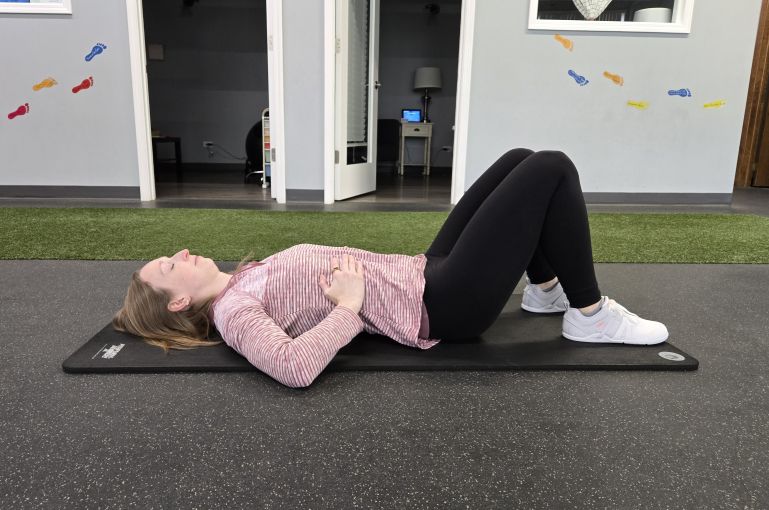
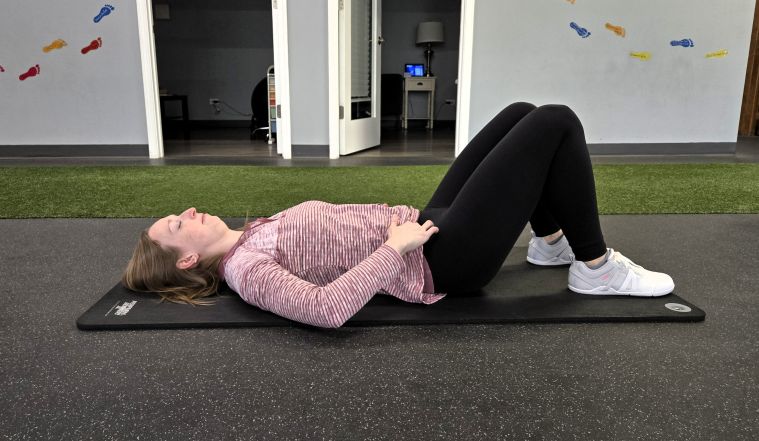
- This can be a confusing statement. It may help to look at a picture of your transverse abdominis muscle, or just try imagining you are wearing a corset around your midsection. Try to envision tightening that corset by squeezing your belly button toward your spine. Your transverse abdominis is a large muscle that travels all the way from your spine to your belly button, under your rib cage. However, when you properly engage this muscle, it might feel like a weak contraction. Start by laying on your back with your knees bent. Try finding the bone that sticks out at the front of your hip/pelvis and walk your fingertips just off the bone there. When you try to squeeze this muscle, you should feel a gentle contraction under your fingertips. You should be able to breathe while doing this exercise!
- This can be a confusing statement. It may help to look at a picture of your transverse abdominis muscle, or just try imagining you are wearing a corset around your midsection. Try to envision tightening that corset by squeezing your belly button toward your spine. Your transverse abdominis is a large muscle that travels all the way from your spine to your belly button, under your rib cage. However, when you properly engage this muscle, it might feel like a weak contraction. Start by laying on your back with your knees bent. Try finding the bone that sticks out at the front of your hip/pelvis and walk your fingertips just off the bone there. When you try to squeeze this muscle, you should feel a gentle contraction under your fingertips. You should be able to breathe while doing this exercise!
How to Progress
Now that you know how to isolate and engage your core musculature, here are some ways you can start to make these exercises more difficult:
- Supine marching
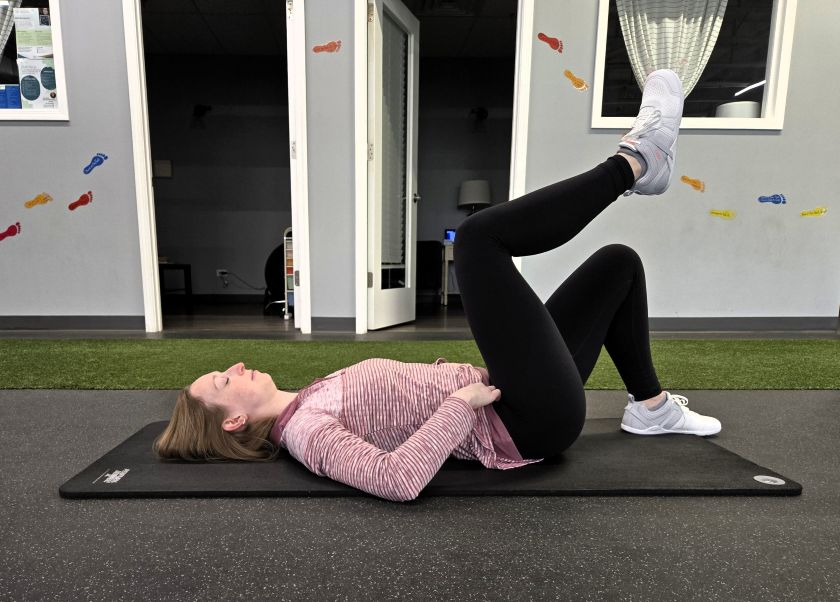
- Like the exercise trying to “squeeze your core”, start by laying on your back with your knees bent and try to isolate your transverse abdominis. Your goal is to keep that muscle engaged throughout this exercise.
- Now try to lift one leg up like you are marching, then return it back to your starting position. Then try switching legs, and repeat this about 10 times. Your goal is to keep your core tight and prevent your low back from lifting up off the floor.
- If this is easy, try lifting one leg up like you are marching, then try to leave that leg up. Next, try to lift your other leg up to the same position. Then try to bring one leg back down, and then the other. Again, your goal is to do this without letting your back arch off the floor to try to help you!
- Dead Bugs
- Start laying on your back. This time, try to bring your arms overhead and lift your legs up into a tabletop position. Now, straighten one of your legs out in front of you without letting it touch the floor. At the same time, bring your opposite arm overhead. Then return both your arm and leg to the starting position, and repeat with your opposite side. See if you can repeat this 10 times total, with the goal of not letting your back arch off the floor!

- Start laying on your back. This time, try to bring your arms overhead and lift your legs up into a tabletop position. Now, straighten one of your legs out in front of you without letting it touch the floor. At the same time, bring your opposite arm overhead. Then return both your arm and leg to the starting position, and repeat with your opposite side. See if you can repeat this 10 times total, with the goal of not letting your back arch off the floor!
- Planks
- You can do these on your elbows or your hands, whichever feels better for you. The goal is to keep your spine in a neutral position, meaning your hips are not sticking up in the air and you are not letting your back sag. You should feel your lower abdominal muscles engage to help keep you in this spine neutral position.
- If this is too difficult, try dropping down onto your knees, or you can modify this by starting at a countertop height and work your way lower
- If this is too easy, try lifting one arm or one leg at a time and hold it, or alternate lifting an arm or leg

- Side planks
- Don’t forget about working your obliques! We want to get the sides of your core working as well. Start by laying on your side, with your elbow bent directly under your shoulder. You can do this with your knees bent or work up to doing this with your legs straight once this gets easy. Your goal is to lift your bottom hip up off the floor and try to hold it.
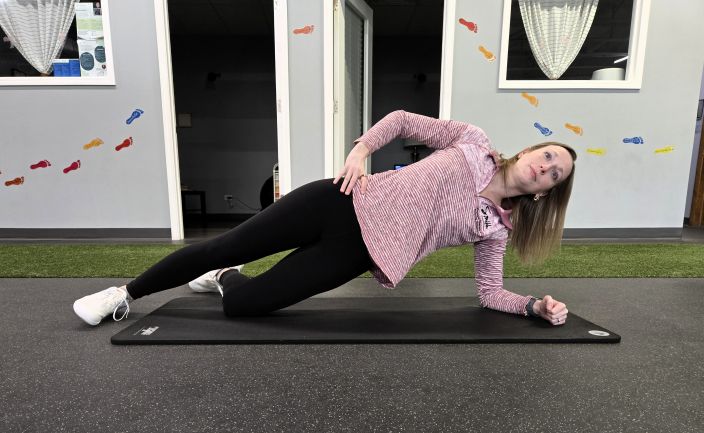
- Don’t forget about working your obliques! We want to get the sides of your core working as well. Start by laying on your side, with your elbow bent directly under your shoulder. You can do this with your knees bent or work up to doing this with your legs straight once this gets easy. Your goal is to lift your bottom hip up off the floor and try to hold it.
- You can do these on your elbows or your hands, whichever feels better for you. The goal is to keep your spine in a neutral position, meaning your hips are not sticking up in the air and you are not letting your back sag. You should feel your lower abdominal muscles engage to help keep you in this spine neutral position.
- Carrying
- Farmer carry
- This is a very functional exercise. Think about bringing in your groceries. Grab a weight or a kettlebell and hold it in each hand. Try to bring your arms away from your side just slightly. You can either practice standing, walking, or marching in place. You can also try holding different weights in each hand, so your body has to learn how to stabilize to stay even. Imagine you have a glass of water on your head. Try not to let the water spill!

- This is a very functional exercise. Think about bringing in your groceries. Grab a weight or a kettlebell and hold it in each hand. Try to bring your arms away from your side just slightly. You can either practice standing, walking, or marching in place. You can also try holding different weights in each hand, so your body has to learn how to stabilize to stay even. Imagine you have a glass of water on your head. Try not to let the water spill!
- Suitcase carry
- You can do all the same things as you did with the farmer’s carry, but this time you only have a weight in one hand. You can even try squatting or lunging while holding a weight or kettlebell in one hand to work your core to figure out how to keep you level again.
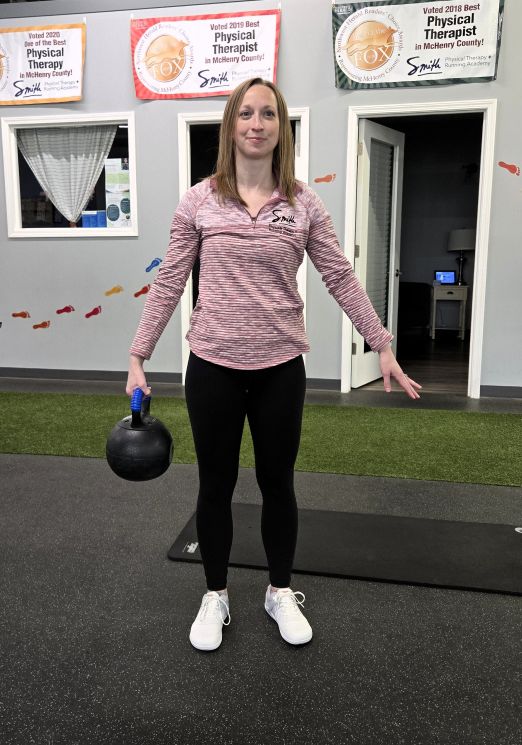
- You can do all the same things as you did with the farmer’s carry, but this time you only have a weight in one hand. You can even try squatting or lunging while holding a weight or kettlebell in one hand to work your core to figure out how to keep you level again.
- Farmer carry
Your core is the foundation that supports every breath you take, every step you make, and every movement you perform. Whether you’re lifting weights, chasing your kids, training for a race, or simply getting through your daily routine, a strong, well-coordinated core helps improve performance, reduce injury risk, and support long-term spine health.
The good news is that building a stronger core doesn’t require endless sit-ups or complicated workouts. By focusing on proper breathing, learning to engage your deep core muscles, and gradually progressing to functional strengthening exercises, you can create a stable foundation that carries over into every aspect of life.
If you’re experiencing back pain, pelvic floor symptoms, or you’re unsure if you’re activating your core correctly, a physical therapist can help identify what’s missing and create a plan that’s tailored to your goals. Contact us today to schedule an evaluation and take the first step toward moving with greater confidence, strength, and stability.
Featured In Fit & Well: April Flood Shares Expert Tips on Hip Mobility
About the Author: April Flood