Swimming Made Easier
May 22, 2017
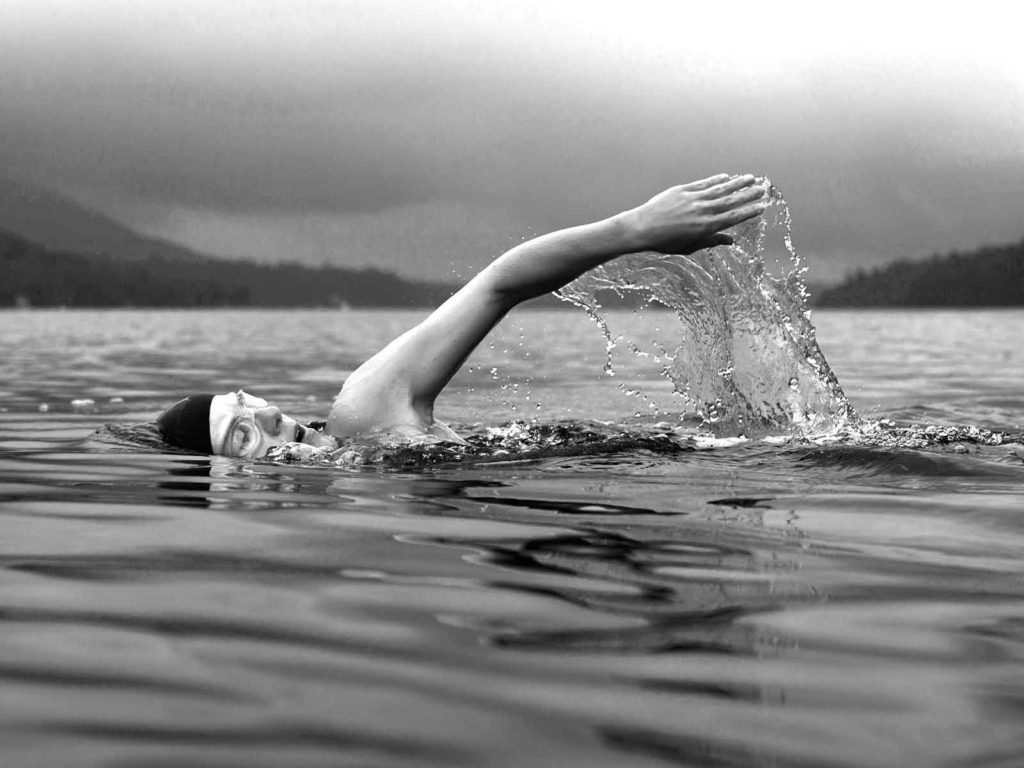
There are many misconceptions about swimming, but one of the greatest is the idea that there is no support when you are in the water. This idea stems from the fact that water is fluid. However, it is important to note that the hand acts as support for the body and that our body moves relative to the hand when swimming. It is much easier to move our body in relation to our hand than to make our hand move our whole body.
So, swimming becomes this idea of changing support from hand to hand. This is similar to the idea that when running on land, it is a change of support from foot to foot. The following drills are to help reinforce this feeling of shifting weight from one support to the other and to develop the proprioception (feeling) of how to move your body weight when changing support.
- Find some monkey bars at your local playground – as you make your way across the bars, reach out, grab a bar, and swing your body until your other free hand can grab the next bar. (This is so much harder as an adult than it was as a kid!) When you are in the water, use this image to help improve your awareness of moving your body over your hand.
- Next, start with both hands on a bench or platform. Start by pulling your right hand from the bench. All your body weight will now be on your left hand. Next, pull your left hand off the bench and allow your right hand to come back to the bench. It is key to note: do not move the hand in the air until the support hand is removed from the bench. Repeat 16 reps, 3 sets.
- The final drill takes place while floating in the water. This is to help you understand the feel of support in water. Start by lying face down on the surface of the water with your hands at your side. Next, make quick back-and-forth movements (this is known as sculling) with both hands to maintain a flat position, then try doing this with just one hand. The point of this drill is to improve your understanding of floating support. Yes, the body will float by itself; but you will notice that it takes the support of your moving hands to help maintain a stationary position. It’s more work than you think!
(Sculling picture compliments of The Swimming Expert.)
About the Author: Denise Smith