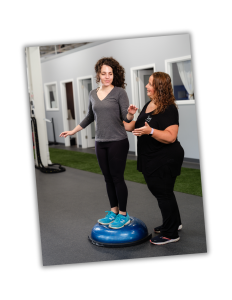
Concussion Testing
March 19, 2026

Concussion Testing & Management
Concussions are a major topic of discussion among parents, athletes, coaches, and medical professionals. There are an estimated 3.8 million sports-related concussions that occur every year. Because a concussion is an injury of the brain, it can essentially affect every system of our body, and no two concussions are the same. (To see what happens to the brain during a concussion, check out this video from the CDC). Understanding the impact a concussion has on each individual is crucial for ensuring proper treatment, preventing long-term effects, and safely returning to daily life or sports. The key to this process? Concussion testing.
Baseline Testing: Preparing Before an Injury
The first step in concussion management often begins before an injury occurs. This is called baseline testing and it establishes an individual’s “normal” cognitive and physical performance levels. Concussion baseline testing is most often administered for our teenage athletes by school or club sport organizations. Baseline testing establishes how a person performs with cognitive and/or physical tasks without a concussion. Following a concussion, these same tests are performed again and can be compared to an athlete’s “normal.” While this information is important and can help guide rehabilitation after a concussion, it is a piece of the recovery puzzle – not a rigid set of rules to follow.
Baseline testing should be multifaceted and evaluate:
- Balance and proprioception – stability at rest and with movement, and body position awareness
- Cognitive function – memory, inhibitory control, reaction time
- Visual processing – tracking, focus, and eye-hand coordination
Some of these tests, like memory, reaction time, and visual processing, are often performed on computerized programs. Balance can be assessed with or without technology. While not mandatory, baseline testing can be useful for:
- Identifying pre-existing deficits
- Guiding treatment if a concussion occurs
- Providing a comparison point post-injury
Physical therapists and athletic trainers are typically the professionals who administer these tests, ensuring accuracy and proper interpretation. The most common baseline test that is used in the U.S. is the Impact Test. This test is best used for individuals age 13 and older. This test is easy to administer, but has some limitations and should not be the only thing relied on to identify concussion. Kids are often aware of this test and purposefully perform poorly on the test to establish a low baseline. Because of this, reliability of the Impact test is not guaranteed. Also, Impact testing is only computer-based testing. It does not look at someone’s ability to dual task or maintain balance, which can be affected after a concussion.
Immediate Concussion Screening
If an athlete sustains a bump, blow, or jolt to their head or body during practice or competition that could possibly result in a concussion, they should be immediately pulled from play. They should be moved to a quiet location and screened for a concussion. If a concussion is suspected, sideline screening tools can help quickly identify whether an athlete has sustained a concussion. The most commonly used free resource to scan for concussion on the sideline is the SCAT-6. Coaches, doctors, physical therapists and athletic trainers can use these tools to determine if:
- Immediate medical attention is needed
- Referral to a primary care physician or emergency room is necessary
To determine if a concussion is present, it must be determined that the athlete had a mechanism of injury that could result in a concussion. They also need one positive finding with concussion testing. Even if initial testing is unremarkable, the athlete should be observed for the next 24-hours, as concussion symptoms can take up to 48-72 hours to develop. Once a concussion is confirmed, post-injury testing is performed. If a baseline concussion test exists, results are compared to the pre-injury scores, highlighting areas that need treatment. Even without a baseline, a post-injury assessment by a concussion specialist is vital for guiding recovery.
Why Proper Concussion Recovery Matters
A concussion temporarily overwhelms millions of neurons in the brain, causing them to fire simultaneously. In order for these neurons to fire, there is an exchange of molecules in the nerve cells. The movement of these molecules in and out of the nerve cells requires a tremendous amount of energy, and depletes the stores of energy in the brain. This energy depletion means the brain requires time to restore normal function which takes 22–30 days on average.
Returning to daily activities too soon can:
- Extend recovery time
- Continue to deplete energy in the brain
- Intensify symptoms such as headaches, dizziness, and brain fog
- Increase the risk of a second concussion
Cognitive rest is essential during the first 24–48 hours post-injury. This includes activities that do not exacerbate symptoms, like listening to music or light reading. Gradual return to daily activities should be symptom-guided and be supervised under the care of a concussion specialist. The general principles of returning to activity are:
- Start with short periods of work or school
- Incorporate light cardiovascular exercise, such as walking or stationary biking
- Maintain a healthy diet
- Avoid full return to sport until cleared to do so
Concussion Symptoms Are Variable & Tricky To Identify
Because a concussion is an injury to the brain, symptoms of concussion vary greatly. Additionally, symptoms can shift and change throughout recovery. In general, symptoms of concussion can fall into different categories with findings including (but not limited to):
- Oculomotor (eye): blurred vision, difficulty tracking objects and reading, eye fatigue
- Vestibular (inner ear): vertigo, imbalance, clumsiness, brain fog
- Autonomic Nervous System: changes in blood pressure, heart rate, respiration rate, hormone regulation
- Emotional: more angry or sad than normal, large mood swings
- Sleep: difficulty falling asleep, difficulty staying asleep
- Cognitive: long and short term memory disruption, difficulty concentrating, difficulty following directions and processing information
- Psychological: anxiety, depression, fear avoidance behavior
Why Proper Concussion Recovery Matters
A concussion temporarily overwhelms millions of neurons in the brain, causing them to fire simultaneously. In order for these neurons to fire, there is an exchange of molecules in the nerve cells. The movement of these molecules in and out of the nerve cells requires a tremendous amount of energy, and depletes the stores of energy in the brain. This energy depletion means the brain requires time to restore normal function which takes 22–30 days on average.
Returning to daily activities too soon can:
- Extend recovery time
- Continue to deplete energy in the brain
- Intensify symptoms such as headaches, dizziness, and brain fog
- Increase the risk of a second concussion
Cognitive rest is essential during the first 24–48 hours post-injury. This includes activities that do not exacerbate symptoms, like listening to music or light reading. Gradual return to daily activities should be symptom-guided and be supervised under the care of a concussion specialist. The general principles of returning to activity are:
- Start with short periods of work or school
- Incorporate light cardiovascular exercise, such as walking or stationary biking
- Maintain a healthy diet
- Avoid full return to sport until cleared to do so
The Role of Physical Therapy in Concussion Rehabilitation
Physical therapy with a concussion specialist is a cornerstone of concussion recovery, particularly when symptoms persist beyond 10–14 days. A concussion specialist can:
- Coordinate care with physicians, coaches, and trainers
- Address symptoms like blurred vision, headaches, dizziness, balance issues, and neck pain
- Guide a return-to-work or a return-to-school program to safely return to normal daily learning or occupational tasks
- Guide a return-to-play program, a step-by-step progression for safely resuming sports or daily activities
For athletes, proper rehabilitation is critical. Studies show high school athletes who return too soon are three times more likely to sustain another concussion in the same season. Factors that contribute to this, according to CDC research, are that:
- 69% of high school athletes reported playing with concussion symptoms
- 40% said their coach was unaware of their condition
- There is a higher risk of orthopedic injury in the first year after a concussion
Physical therapy ensures that activity resumes safely, gradually, and symptom-guided, reducing the risk of re-injury. Learn more about our Balance & Concussion Center, or Contact Us to schedule an appointment.
People Also Ask
Q: What is the purpose of baseline concussion testing?
A: Baseline testing establishes an individual’s normal cognitive and physical performance levels, which can be used to compare post-injury results and guide treatment.
Q: How long does it take to recover from a concussion?
A: Recovery varies, but on average it takes 22–30 days for the brain to restore energy and function. Some cases may require longer rehabilitation.
Q: When should I see a concussion specialist?
A: If symptoms persist beyond 10–14 days or interfere with daily activities, seeing a specialist early can speed recovery and prevent complications.
Q: What are common concussion symptoms?
A: Symptoms include headaches, dizziness, blurred vision, memory problems, brain fog, balance issues, sleep disturbances, and emotional changes.
Q: Can physical therapy help with concussion recovery?
A: Yes. Physical therapists guide safe return to activity, treat vestibular and balance issues, and provide a step-by-step progression to resume sports or daily life safely.
About the Author: Dana Tress