What is Hypermobility
February 4, 2026

Understanding Hypermobility, Instability, and Long-Term Joint Health
Hypermobility sounds like a superpower, and sometimes it is. Dancers, gymnasts, yogis, and even some runners benefit from joints that move beyond the average range.
But when mobility exceeds control, it can quietly shift from flexibility to instability. And that’s when pain, fatigue, and recurring injuries often enter the picture. Let’s break down what hypermobility actually is, when it matters, and what you can do about it.
What Is Hypermobility?
Hypermobility means a joint moves beyond the typical range expected for that joint. It can:
- Affect a single joint (like knees or shoulders)
- Be present throughout the body (generalized joint hypermobility)
- Exist without symptoms
- Or be part of a connective tissue disorder
Some people don’t even realize they’re hypermobile until pain or instability develops.
Important: Hypermobility itself is not a diagnosis. It’s a trait. The issue arises when that extra range is not supported by strength and control.
When Is Hypermobility a Problem?
Hypermobility becomes concerning when it’s paired with symptoms such as:
- Joint pain (especially after activity or prolonged standing)
- Joints that feel unstable or “slip”
- Difficulty holding positions without locking joints
- Chronic muscle tightness (from muscles overworking to create stability)
- Fatigue
- Digestive or systemic symptoms in some cases
When symptoms extend beyond the joints, providers may evaluate for connective tissue disorders such as Ehlers-Danlos syndrome.
Why Do Some People Have Hypermobile Joints?
Several factors contribute:
- Genetics (often runs in families)
- Ligament laxity (looser connective tissue)
- Bone structure variations
- Training demands (sports emphasizing flexibility)
- Postural habits over time
For some, it’s simply how they’re built. For others, lifestyle and repetitive movement patterns amplify it.
The Hidden Issue: When Mobility Turns Into Instability
Here’s where things get interesting.
When a joint moves beyond its ideal range, the body often compensates to feel stable. A common example is locking out the knees while standing.
That “locked” position may feel strong and steady — but it shifts load into passive structures (ligaments and joint capsule) instead of active support (muscles). Over time, this can lead to:
- Knee pain
- Hip discomfort
- Increased pelvic tilt
- Low back strain
- Muscle overuse
In the image above, notice how hyperextended knees push the pelvis forward, increasing strain on the lower back. That subtle shift can create a cascade of compensations up and down the chain.
More mobility is not always better.
Mobility without control equals vulnerability.
Can You Spot the Hypermobility?
Take a look at the photo on the left. She has hypermobility present in her knees. Compare that to the photo on the right, where she’s focusing on not allowing her knees to hyperextend.
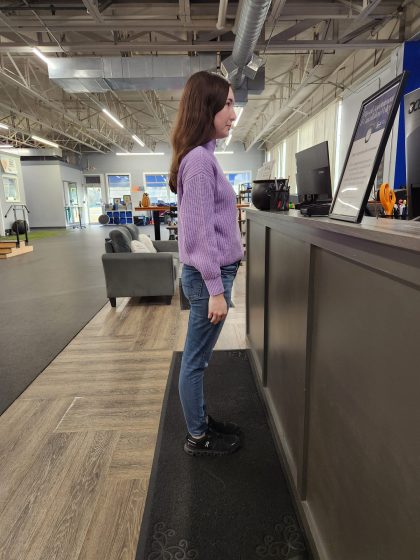

Notice how in the photo on the left, her knees are locked back and her pelvis tilts forward. This change in pelvic tilt can place extra pressure on the lower back and hips. Over time, standing with your knees hyperextended may contribute to knee pain, or even back pain.
Small Adjustments, Big Benefits
If you notice you tend to stand with your knees locked out, try this: consciously unlock your knees and shift your posture to look more like the photo on the right. It may feel strange at first, but these small changes can make a big difference in protecting your joints long-term.
When to See a Physical Therapist
Seek guidance if you experience:
- Recurring joint pain
- Repeated sprains
- Joints that feel unstable
- Persistent back or hip pain
- Difficulty returning to sport
A movement assessment can identify:
- Where instability is occurring
- Which muscles aren’t pulling their weight
- How posture is contributing
- What strength strategy supports your specific body
The goal isn’t to take away flexibility.
It’s to build control within it.
If you think you may have hypermobility and are experiencing pain, consult with a medical professional or physical therapist. They can help assess your movement patterns, build strength around your joints, and guide you toward better stability without taking away your mobility.
People Also Ask
Is joint hypermobility dangerous? Not by itself. Many people live symptom-free with hypermobility. It becomes problematic when instability leads to pain, injury, or chronic compensation patterns.
What causes hypermobile knees? Often ligament laxity, genetics, or habitual posture. Repeatedly locking the knees into hyperextension can reinforce the pattern.
Can hypermobility cause back pain? Yes. Hyperextended knees can tilt the pelvis forward, increasing stress on the lumbar spine and contributing to low back discomfort.
Should people with hypermobility lift weights? Yes — and they often benefit significantly from it. Controlled strength training improves joint stability and reduces injury risk.
How do I know if I have a hypermobility disorder? If hypermobility is paired with chronic pain, frequent dislocations, fatigue, or systemic symptoms, consult a medical professional for evaluation.
About the Author: April Flood