How Pillow Choice Can Worsen Your Symptoms
July 17, 2025

Did you know the posture you are in while you are sleeping may contribute to your neck pain, headaches, jaw pain, or dizziness symptoms? In fact, one of the most common questions we get at the Balance+Concussion center from clients is “what kind of pillow do you recommend?” The answer we give is…. “It Depends!” Let’s dive into why that is the best general answer we can give you and explore where to go from there.
Sleep Ergonomics
The practice of ergonomics is customizing an environment specifically for an individual to reduce sustained abnormal postures and forces on the body to reduce the risk of injury by maintaining an optimal posture as much as possible. Sleep ergonomics, therefore, refers to adapting ones sleep environment to help maintain proper posture and alignment. In doing so, the theory is that the chances of having abnormal strains and stresses to the body due to poor sleep posture are reduced. Sleep ergonomics are implemented through the selection of pillows sleeping surfaces, and body postures that help maintain normal alignment of the spine and extremities.
When we think of the spine, it should have normal curvatures – a forward curve in the neck (cervical spine), a slight backwards curve in the upper back (thoracic spine), and another forward curve in the low back (lumbar spine). The pillow and mattress that we choose should help us maintain these normal curves in our spine when we sleep. Therefore, the pillow we choose should support the normal forward curvature of the neck while cradling the head and not push the head forward. This can be achieved with a variety of pillows: ones that have curves already in them that are of appropriate size for the individual, or other pillow types (foam, down, etc.) that can be manually adapted to support ones neck.
This is why we must answer “it depends” when asked what pillow to purchase. There is not one miracle pillow that works for everyone. Choosing poorly, however, can have painful and dizzy consequences.
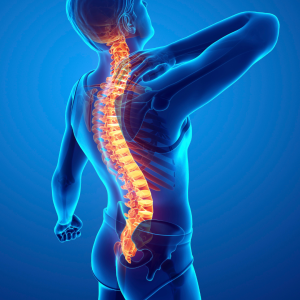
Normal curves of the spine can be seen here.
Consequences of Poor Pillow Selection
A poor pillow choice can have negative effects on the body. If it is too thick, the pillow will support the head above the body. This pushes the neck into a forward or sideways flexed posture. Maintaining this position can strain muscles in the neck and upper back and contribute to a forward head posture. This can lead to increased jaw pain, neck pain, and cervicogenic or tension headaches. Conversely, a pillow that does not offer enough support can lead to increased compressive forces in the joints of the spine leading to nerve and muscle irritations in the neck, head and upper back. Finally, a pillow that already has curves built into it may not match the curves of your own neck. Also, if you are someone who moves around a lot in your sleep, you may not always sleep with proper alignment on the curve of the pillow. This can lead to abnormal pressure on the neck and jaw, leading to TMJ pain, headaches and neck pain.
The Double-Pillow Problem:
Another scenario that we often see is someone using two pillows for support under their head at night. The person may be using two pillows due to neck pain or dizziness symptoms and initially finds that using extra pillows at night help to reduce their pain or dizziness symptoms. However, using the extra pillow(s) becomes a routine practice and the person becomes unable to tolerate laying down fully. Attempting to lay down on one pillow then produces dizziness and/or neck pain due to a severe forward head posture or central sensitization of the brain to produce symptoms of dizziness.
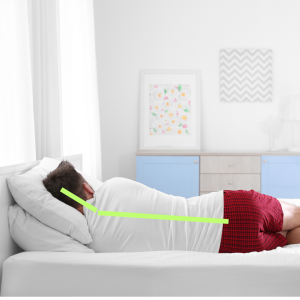
Sleeping on two pillows can put the neck into a strained posture.
How Can PT Help?
A physical therapist can work with you to help determine if the posture in which you sleep is contributing to your head pain, neck pain or dizziness symptoms. From there, they can help you make proper pillow selections and adapt sleeping postures to help eliminate sleep posture as a contributing factor to your symptoms.
About the Author: Dana Tress