Tips For Treadmill Running
November 17, 2016
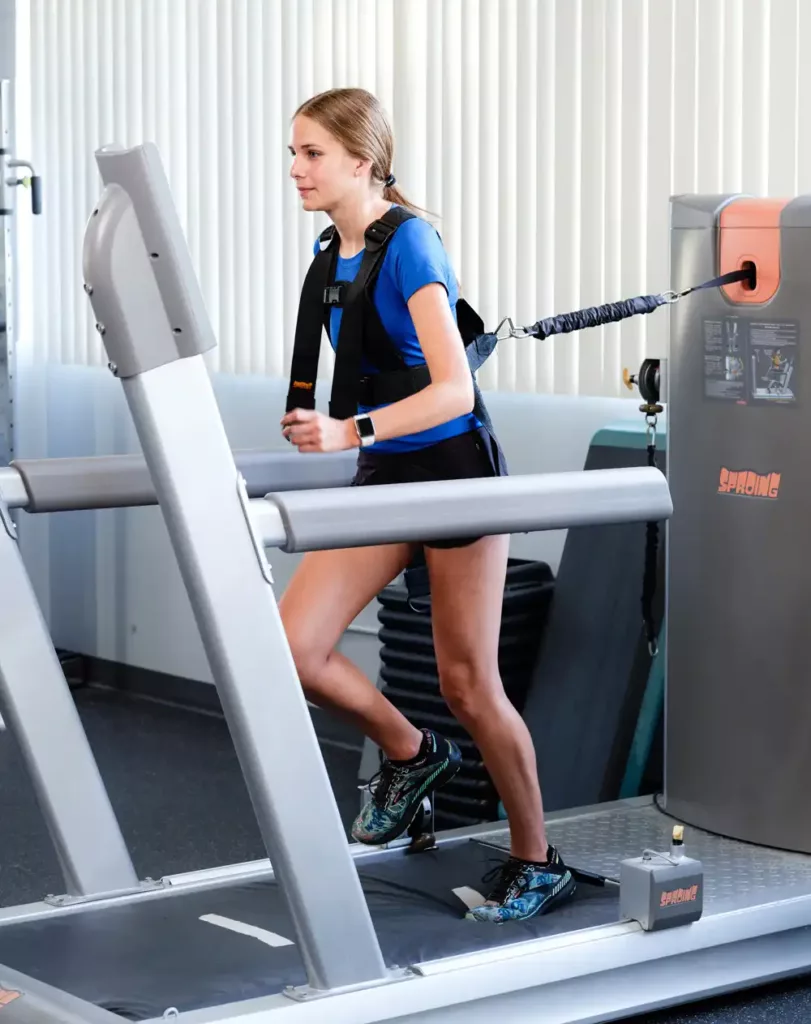
Though it’s not ideal, treadmill running is sometimes the only option to continue training (especially during Midwest winters).
Anybody who’s a runner understands that there is a BIG difference between running on a treadmill and running on the ground. The biggest difference is that you do not have to move your body forward; you are simply trying to keep up with the belt. The other disadvantage to running on a treadmill is that there isn’t an opportunity to work on falling, which acts as the accelerator. The only means for increasing your speed is to bump the pace of the belt up. So while you may be able to run at 10.0 on a treadmill, you may not be able to keep that speed up while you are running on the ground, making the transfer between surfaces somewhat frustrating for runners.
To help reduce the risk of injury and help you work on your technique:
1. Try not to stand too close to the front of the treadmill. This allows a runner to attempt to keep their weight forward, especially at the hips. This is sometimes scary for runners, as they are afraid their feet will slip off the back edge of the treadmill. However, this can be helpful because you won’t have the option to try to push off from behind you and will have to quickly pull your foot up underneath your hips, which will help train your hamstrings to do their job of pulling your foot up off the belt.
2. Utilize a metronome or a song with greater than 180 beats per minute. Increasing your cadence on a treadmill helps reduce the risk of injury due to impact. So while it may feel like you are taking smaller steps on a treadmill, anything is better than overstriding and landing ahead of your body, which causes a significant force of impact through your ankles, knees, hips, and low back.
3. If you feel like you’re bending forward at the waist (sometimes this also happens when power walking), simply clasp your hands behind your back and attempt to pull them away from your back. This will cause your body to stand upright.
4. If you do feel like you are overstriding, utilize the incline feature on the treadmill. Start at a 4- or 5-degree incline; it is nearly impossible to overstride when the front of the treadmill is raised above you.
5. See if you can find a Sproing in your area. The Sproing is a soft surface trainer that utilizes an air cushion and a harness to work on your skill of running and provides a different surface to train on—one that reduces impact and increases your awareness of proper form.
Though it should not be ignored that treadmill running may increase your risk of injury simply due to the increased force of impact, it can be utilized when there is no other viable option. Use it cautiously, be aware of its limitations, and don’t rely on it as your primary method for training. If you ever get on a treadmill that looks antiquated or does not feel right, do not force yourself to run on that surface. Remember your technique drills and runner-specific strengthening activities, which are extremely beneficial to your training.
About the Author: Denise Smith